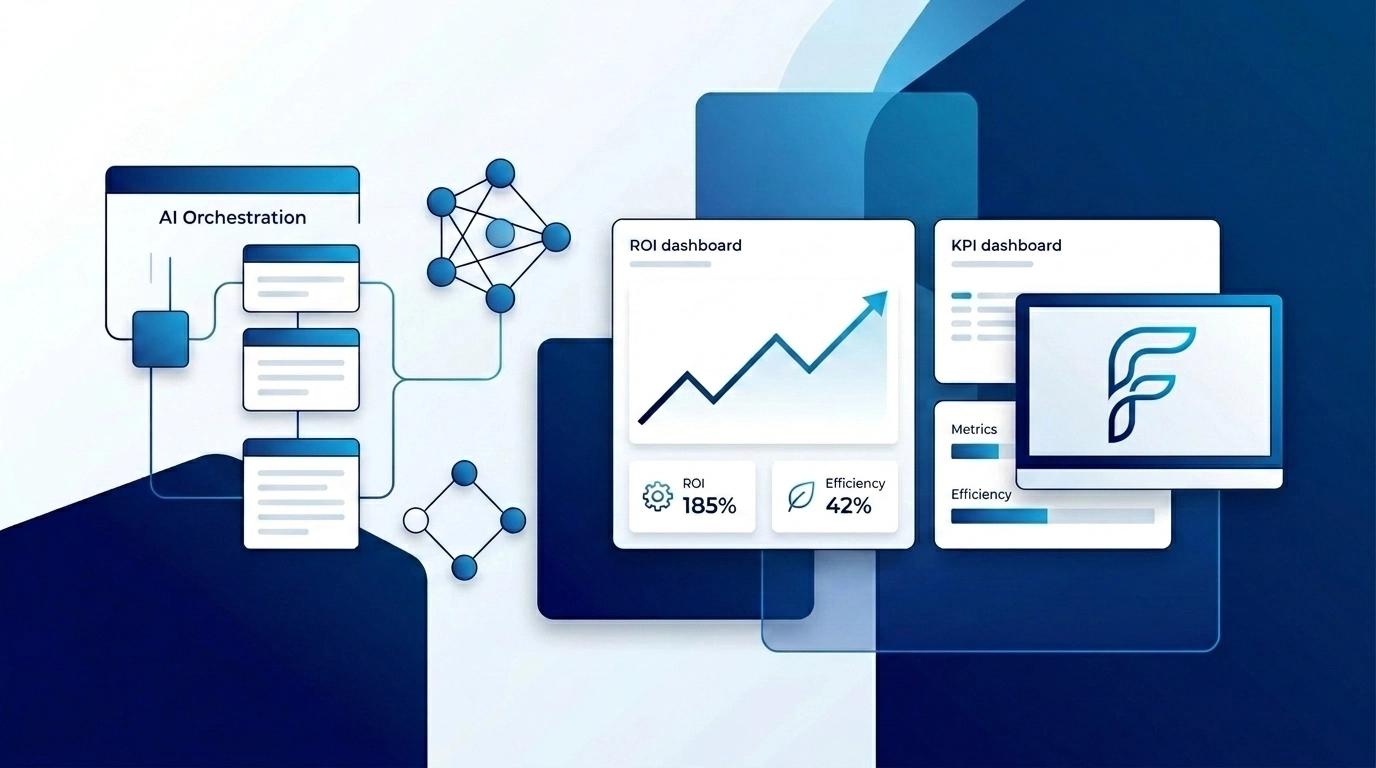
How to Measure the ROI of AI Agents (The Exact Framework We Use at FluencerAI)

Gabriel Sorrentino
Founder · AI Solutions Architect, FluencerAI
4 min read
If you are a CEO or founder, you have likely been bombarded with promises that "AI will change everything." But at the end of the day, what matters to your board isn't "cool" tech—it's ROI (Return on Investment).
Many companies fail in AI projects because they treat them as science experiments rather than business initiatives. At FluencerAI, our approach is the opposite: if we can't measure the financial or operational impact, it doesn't make sense to implement.
In this article, we will reveal the framework we use to measure the success of the AI agents we build for our clients.
Quick Answer: What is AI Agent ROI?
AI ROI is not just about reducing payroll. It is measured through three main vectors: Efficiency (doing it faster and cheaper), Effectiveness (doing it better with fewer errors), and Strategy (doing what was impossible before). The basic formula is: (Total Gains - Implementation Costs) / Implementation Costs, but the real magic happens when we look at "Expert Time Recovery" metrics.
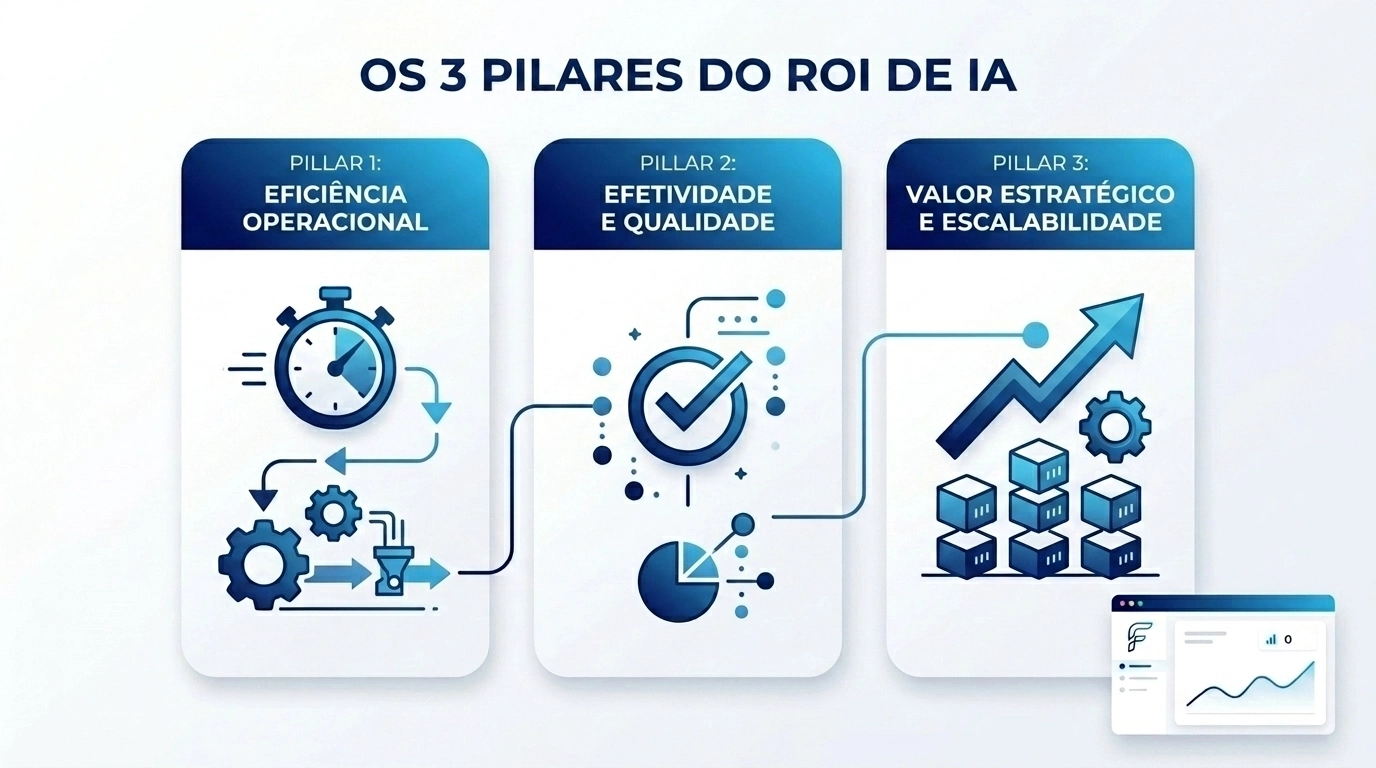
FluencerAI's 3-Pillar Framework
To move from "hype" to results, we divide measurement into three fundamental pillars.
1. Operational Efficiency (Where costs drop)
This is the most obvious ROI. Here we measure Cost-to-Serve (the cost to serve a customer or complete a task).
- Automation Rate: What percentage of tasks does the agent resolve from start to finish without human intervention?
- Cycle Time Reduction: How long did a manual process take versus a process orchestrated by AI?
- Volume per FTE: How many tickets or leads can the same team process now?
2. Effectiveness and Quality (Where revenue increases)
Agents don't get tired and don't forget details. This generates quality gains that impact LTV (Lifetime Value).
- First Contact Resolution (FCR): In sales or support, does the agent resolve the issue in the first interaction?
- Human Error Reduction: How much did it cost to fix manual data entry errors in the CRM?
- Response Speed: Leads responded to in less than 5 minutes convert up to 21x more. An AI agent does this in milliseconds.
3. Strategic Value and Scalability (Where equity grows)
This is the pillar that CEOs value most. It's the ability to scale without linear hiring.
- Expert Time Recovery: If your CTO or Head of Sales spends 10 hours/week on repetitive tasks, how much is it worth to free that time for strategy?
- Data Insights: Agents can analyze 100% of conversations and identify patterns that a standard dashboard would ignore.
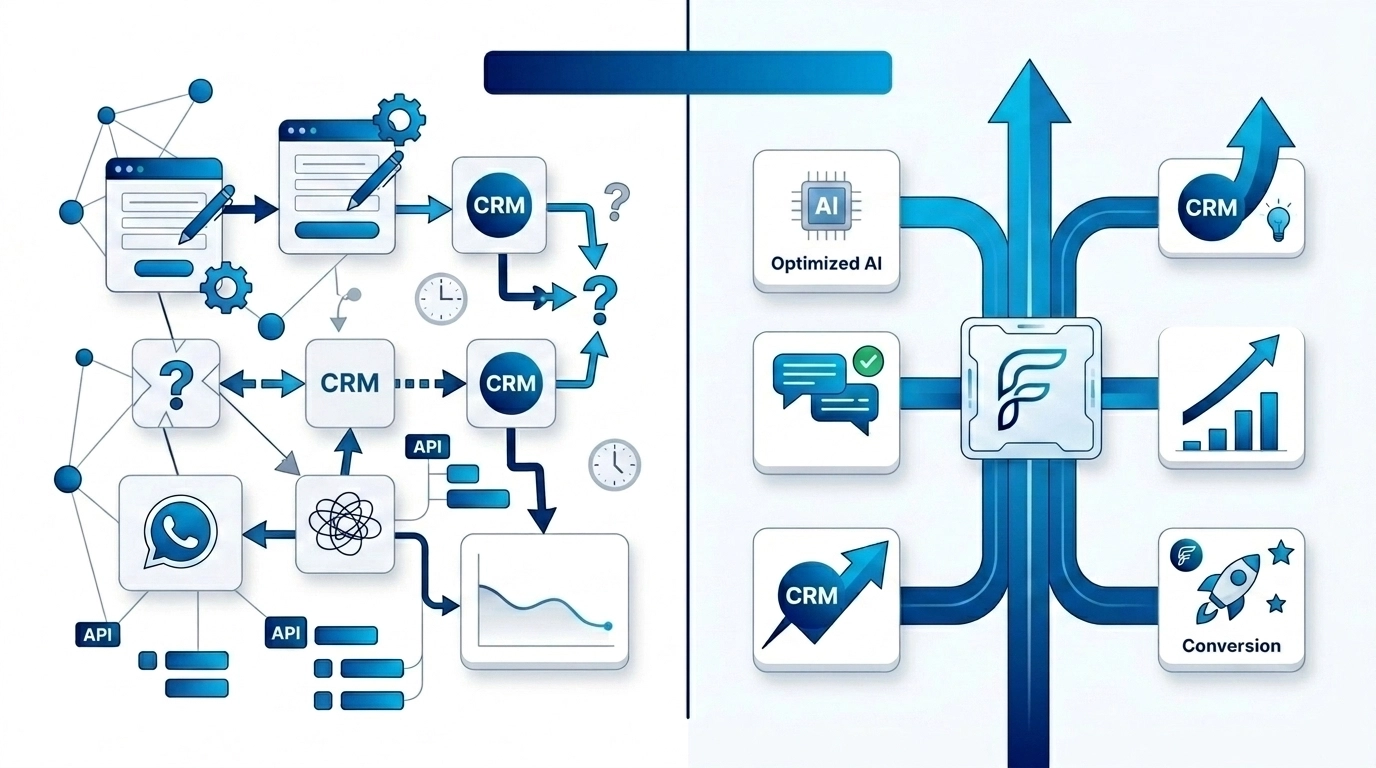
Practical Example: Lead Qualification Automation
Imagine a company that receives 1,000 leads per month.
- Scenario A (Manual): SDRs take 4 hours to respond. Booking rate: 10%.
- Scenario B (AI Agent): Agent qualifies in 30 seconds via WhatsApp/CRM. Booking rate: 18% (due to speed and persistence).
The ROI here isn't just the SDR's saved salary, but the 80% increase in the volume of meetings booked for the sales team. It's direct revenue in the bank.
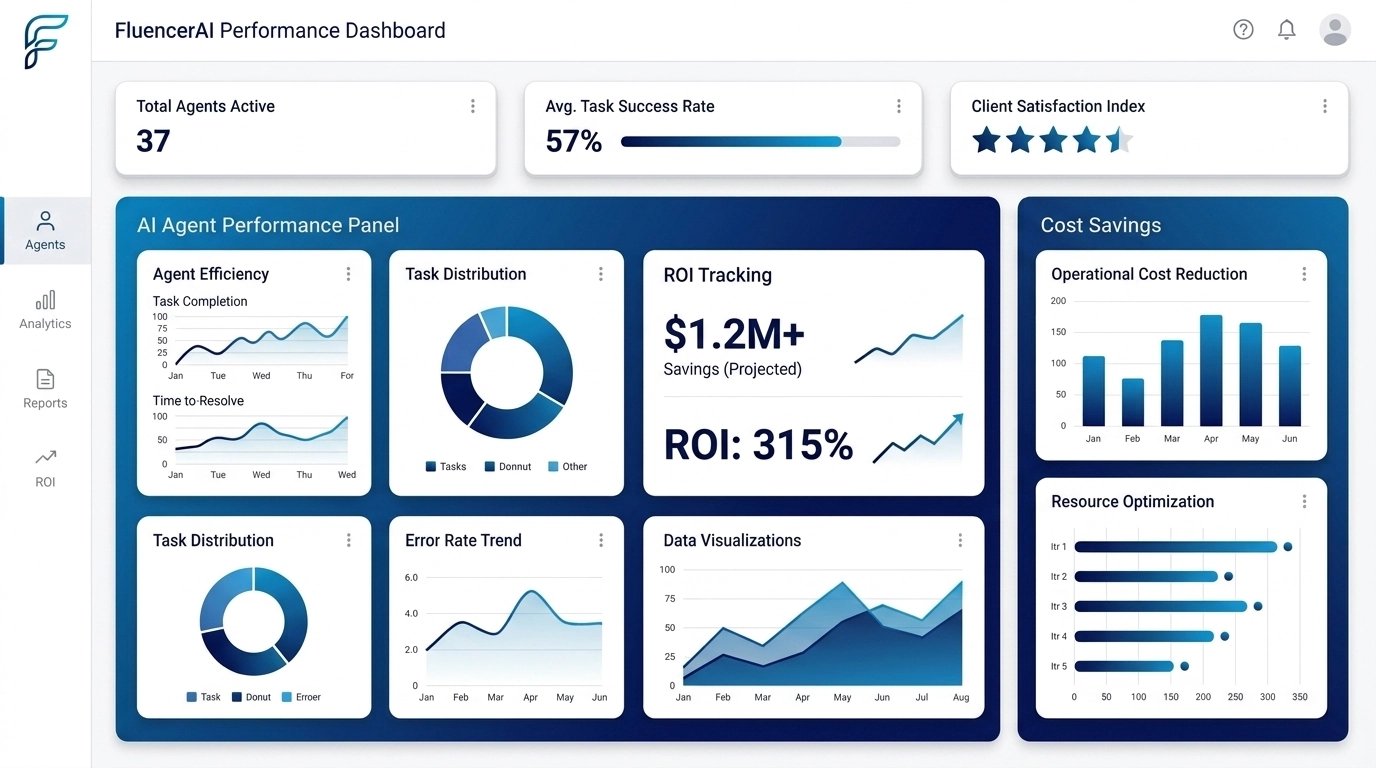
How to visualize this data?
There's no point in having agents if you don't have visibility. At FluencerAI, we implement data visualization dashboards that show in real-time the savings generated and the performance of each agent.
Conclusion: The Next Step
If you are tired of hearing about the "future of AI" and want to see real results in your operation, you need an execution partner, not just theory.
Want to know how much your company can save (or earn) with AI Agents? Schedule a diagnosis with FluencerAI today.
Frequently Asked Questions
- How long does it take to see positive ROI?
- Well-designed projects at FluencerAI usually reach breakeven within 3 to 6 months, depending on the complexity of the API integrations.
- Will AI replace my employees?
- Rarely. The biggest gain is in transforming your employees into "super-humans", automating the boring part of the work so they can focus on what requires judgment and creativity.
- What is the most common mistake when measuring ROI?
- Forgetting opportunity cost. Not implementing AI today means your customer acquisition cost (CAC) will continue to rise while your automated competitors reduce theirs.
About the Author
Related Articles
The Architecture of Coding Agents: Why the "Harness" is the Brain of the Operation
!Coding Agent Architecture Have you ever tried asking ChatGPT or Claude to build an entire system from scratch using only the chat window?
4 min read

7 Architecture Mistakes Killing Your ROI (and How CTO on Demand Fixes It)
Have you ever felt like you're signing blank checks for your tech department? If so, you're not alone.
4 min read
Checklist: Should I Build an AI Agent or a Workflow Automation?
The AI hype has brought a dilemma for CEOs and operations leaders: does everything need to be an "Agent" now?
4 min read
Ready to transform your business?
Schedule a free call and discover how AI can scale your operations.