Checklist: Should I Build an AI Agent or a Workflow Automation?

Gabriel Sorrentino
Founder · AI Solutions Architect, FluencerAI
4 min read
The AI hype has brought a dilemma for CEOs and operations leaders: does everything need to be an "Agent" now? The short answer is no. Implementing the wrong technology for the right problem is the fastest way to burn budget and generate technical frustration.
Many companies try to build complex agents for tasks that could be solved with simple linear automation. Others try to force rigid workflows into processes that require judgment and adaptation, resulting in systems that "break" with every minor variation.
This practical guide offers a decision checklist to help you identify whether your next project should be a traditional process automation or an autonomous AI agent.
What Differentiates a Workflow from an Agent?
Before diving into the checklist, we need to align on concepts.
Workflow Automation is deterministic. It follows "If THIS, then THAT" logic. It is excellent for moving data between systems (like CRM and ERP), triggering notifications, and following processes where there is no ambiguity.
An AI Agent is probabilistic. It uses Large Language Models (LLMs) to reason, make decisions, and use tools dynamically. It doesn't just follow a path; it decides the best path to achieve a goal based on context.
The Decision Checklist: 4 Essential Pillars
To define the technical path and ensure ROI, subject your idea to the following four criteria:
1. Complexity: Is the task linear or does it require reasoning?
- No (Simple/Linear): Use Workflows. If the process can be mapped in a flowchart without any "maybes," traditional automation is cheaper, faster, and more reliable.
- Yes (Complex/Ambiguous): Use AI Agents. If the task requires interpreting natural language, handling unstructured data, or making decisions that depend on constantly changing variables.
2. Value: What is the financial value of the task?
- Low (<$0.10 per execution): Use Workflows. The inference cost of an agent (AI tokens) and development time might not pay off if the task is too trivial.
- High (>$1.00 per execution): Use AI Agents. If the task replaces an hour of human analysis or qualifies a high-ticket lead, the investment in an agent is widely justified by the return on efficiency.
3. Feasibility: Are all parts of the task mappable?
- No: Reduce the scope. If you cannot explain to a human how the task should be done, the AI won't know either.
- Yes: Consider Agents. If the final goal is clear, but the intermediate steps vary according to customer input or data state, the agent will shine in execution.
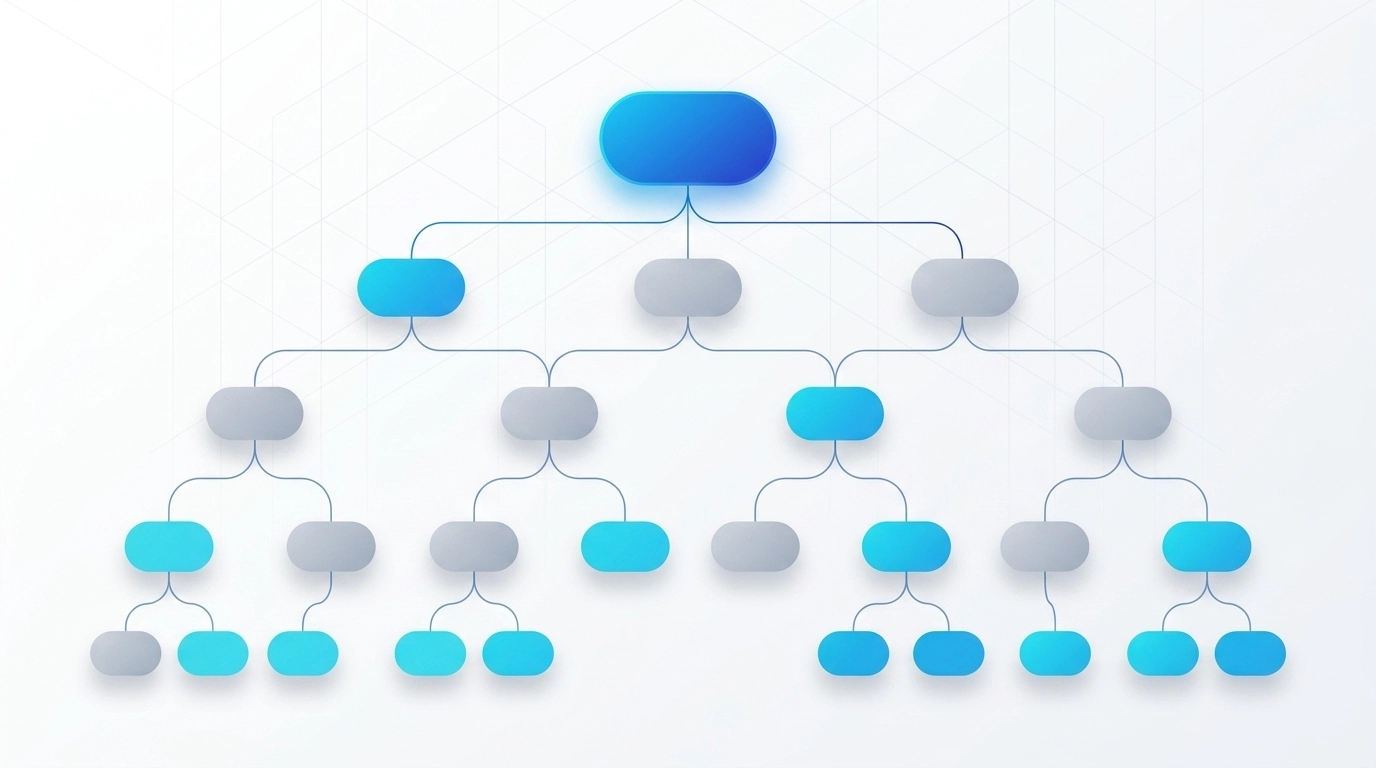
4. Cost of Error: What happens if the AI fails?
- High: Opt for Read-only or Human-in-the-loop models. In these cases, the agent suggests the action, but a human approves it. Rigid workflows are also preferable here for predictability.
- Low: Use autonomous Agents. If the error can be corrected quickly or does not cause critical damage (e.g., a first draft of a meeting summary or initial ticket sorting), full autonomy generates scale.
When Are AI Agents the Right Choice?
AI agents for business are not just "chatbots." They are digital employees capable of operating systems. They make sense when you have:
- Support and Service: Where the customer doesn't follow a script and the AI needs to consult manuals and APIs in real-time.
- Sales Qualification: Where it is necessary to analyze the context of the lead's company before deciding the next step.
- Unstructured Data Analysis: Like reading contracts, extracting information from PDFs, or analyzing feedback sentiment.
If you seek to reduce manual work and scale your operation, the choice between automation and agents should be guided by operational efficiency. At FluencerAI, we help companies design this architecture to ensure technology supports the business, not the other way around.
Summary FAQ
What is the main difference between the two?
Workflow automation follows fixed rules. An AI agent makes decisions based on goals and context.
Can I mix both?
Yes, and it is usually the ideal scenario. We call this "Agentic Workflows," where an AI agent executes complex tasks within a larger automation structure.
Which is more expensive?
AI agents typically have higher development and maintenance (tokens) costs, so the value of the task must justify the investment.
Where should I start?
With the problem, not the tool. If you have an operational bottleneck, the first step is a technical feasibility diagnosis.
Transform Your Operation with Strategy
Don't build technology for vanity. Build for impact. Whether through robust process automation or sophisticated AI agents, the goal is always the same: real ROI and scale.
Need help deciding the best path for your company? Talk to FluencerAI and schedule a technical diagnosis.
About the Author
Related Articles
HumanX 2026: Why Speed Without Method is the Recipe for AI Chaos
!HumanX 2026 Hero If you’ve been following the behind-the-scenes of HumanX 2026 in San Francisco, you’ve felt a clear shift in the air.
5 min read
The Architecture of Coding Agents: Why the "Harness" is the Brain of the Operation
!Coding Agent Architecture Have you ever tried asking ChatGPT or Claude to build an entire system from scratch using only the chat window?
4 min read

Digital Genetic Code: Why 'Having AI' isn't the same as 'Being AI' in 2026
It is April 2026, and the Brazilian corporate landscape has just received a reality check.
4 min read
Ready to transform your business?
Schedule a free call and discover how AI can scale your operations.