HumanX 2026: Why Speed Without Method is the Recipe for AI Chaos

Gabriel Sorrentino
Founder · AI Solutions Architect, FluencerAI
5 min read
If you’ve been following the behind-the-scenes of HumanX 2026 in San Francisco, you’ve felt a clear shift in the air. The mood is no longer "what can AI do?" but rather "how on earth are we going to control this?". The euphoria of prompting has given way to a very real concern about governance, trust, and what leaders are calling the next big operational challenge.
The truth is, we are moving from the "tech toy" phase to the "critical infrastructure" phase. And as Robin Daniels (Chief Business Officer at Zensai) put it in one of the event's most talked-about panels: "Speed + clarity is wonderful. Speed + uncertainty is chaos".
At FluencerAI, we see this happen every day. Companies want to run, but without a method, they are just accelerating toward the abyss. Let's analyze what the biggest names in the market signaled for the future of AI in 2026 and how your company can avoid the "operational apocalypse."
The "Bug Apocalypse" and the risk of AI-generated code
One of the terms that echoed most through the halls of the Moscone Center was the "Bug Apocalypse", coined by Alex Stamos (CPO of Corridors). With the explosion of AI agents generating code, automating processes, and making decisions in milliseconds, the surface for error has drastically increased.
The risk here isn't just a website going down. It’s a logic error in a process automation workflow that could mess up your billing or leak sensitive data. When AI writes code without clear governance, you’re not just gaining speed; you’re accumulating technical debt on an unprecedented scale.
To avoid this, technical maturity is key. If you don't have CTO on demand or senior technical leadership validating what’s being built, you’re essentially letting an ultra-fast (and unsupervised) intern pilot your P&L.
2026: The year of the Agent explosion (not Chatbots)
Forget chatbots that just answer questions. Lin Qiao (CEO of Fireworks AI) was categorical: 2026 is the year of the agent explosion. We’re talking about systems that execute tasks, coordinate workflows, and operate end-to-end processes.
The difference is subtle but brutal:
- Chatbot: You ask, it answers.
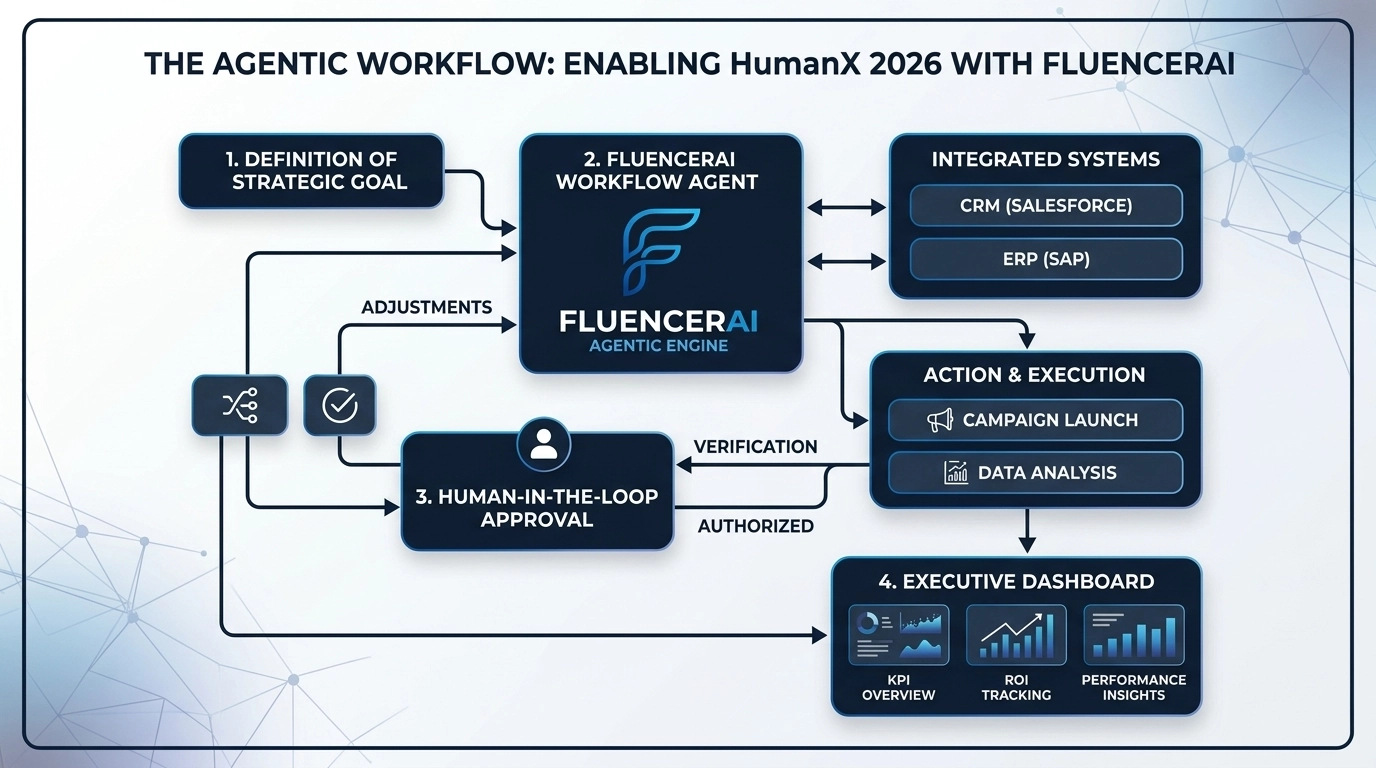
- Agent: You give a goal, it plans, accesses the CRM, integrates with the ERP, and delivers the result.
This shift requires companies to stop "learning AI" and start building AI. As Greg Shove (CEO of Section AI) said: "Agents, agents, agents... build them". In our experience with AI development, the secret lies not in the tool, but in the orchestration.
This is why agentic solutions, such as FluencerAI’s AI Agents, are designed to be "digital employees" with clear boundaries, audit logs, and specific goals.
Governance as a competitive differentiator
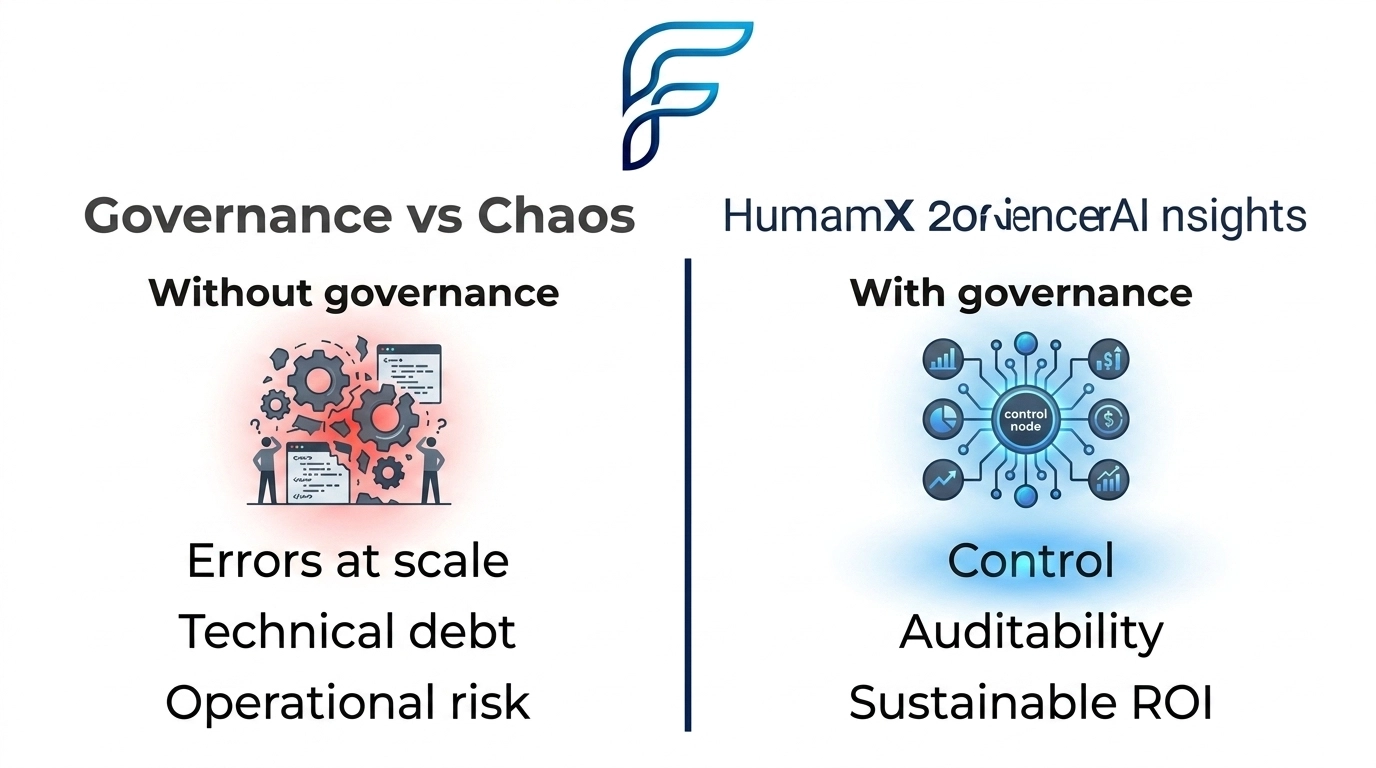
If AI is the engine, governance is the brake and the steering wheel. Without them, you’ll crash. Sarah Franklin (CEO of Lattice) summed it up well: "This is the biggest challenge we have today: how do we govern and manage AI?".
Trust is not something you gain once and that's it. In 2026, trust becomes a strategic metric. If your sales agent starts hallucinating and promising impossible discounts, or if your support system exposes another customer’s data, trust breaks. And as Shivani Siroya (CEO of Tala) noted, winning that trust back is nearly impossible.
At FluencerAI, we advocate that every company needs to become an AI First Business, but this requires a deep diagnosis before execution. There’s no point in automating chaos. If your process is bad, AI will only make it bad... but much faster.
OpenClaw and the infrastructure of intellectual work
The mention of OpenClaw by Srinivas Narayanan (CTO of B2B Applications at OpenAI) signals something massive: agents are becoming the basic infrastructure for intellectual work. We are no longer talking about isolated automations, but systems that think and act.
This validates our thesis that the future of work involves a symbiosis between humans and "claws" (specialized agents). The secret to scaling in 2026 will be:
- Identify where AI generates real ROI.
- Build agents with permissions and safety limits (sandboxes).
- Integrate these agents via robust APIs and integrations.
- Monitor performance through data visualization dashboards.
Frequently Asked Questions (FAQ)
What is the Bug Apocalypse mentioned at HumanX 2026?
It is the systemic risk caused by the massive generation of code and automations by AI without proper human oversight or technical governance, which can lead to catastrophic failures in business processes.
Why is 2026 considered the year of agents?
Because technology has evolved from models that just generate text to systems capable of using tools, accessing databases, and executing complex actions across multiple systems autonomously.
What is the role of governance in AI implementation?
Governance ensures that AI operates within ethical, legal, and technical boundaries. It includes log auditing, permission control, and constant monitoring to maintain customer trust and data integrity.
How does FluencerAI help companies avoid AI chaos?
We act as strategic partners, from the AI First Business diagnosis to the practical implementation of AI employees, always focusing on governance, ROI, and security.
Conclusion: From "Learning AI" to "Operating AI"
The message from HumanX 2026 is clear: the time for just "testing ChatGPT" is over. The competitive advantage now belongs to those who can transform AI agents into real, reliable, and scalable operations.
Staying still is a huge financial risk, but running without direction is operational suicide. The middle ground is the method.
If you want to see how we turn this vision into reality, take a look at our Showroom or contact us for a diagnosis of your operation. At FluencerAI, we don't just use AI; we build the systems that make your company scale with confidence.
About the Author
Related Articles
Digital Genetic Code: Why 'Having AI' isn't the same as 'Being AI' in 2026
It is April 2026, and the Brazilian corporate landscape has just received a reality check.
4 min read
How AI Is Redesigning the Pact Between 5 Generations at Work
!Five generations linked by digital bridges and a central AI orchestration layer in an executive geometric composition Five generations working together would already be complex on its own.
5 min read

On-Demand CTO: The Survival Guide for Modern Tech Leadership
!Executive technology leadership environment with abstract dashboards and FluencerAI branding The image of a CTO who spends the entire day "bit-shoveling" and reviewing every line
5 min read
Ready to transform your business?
Schedule a free call and discover how AI can scale your operations.