
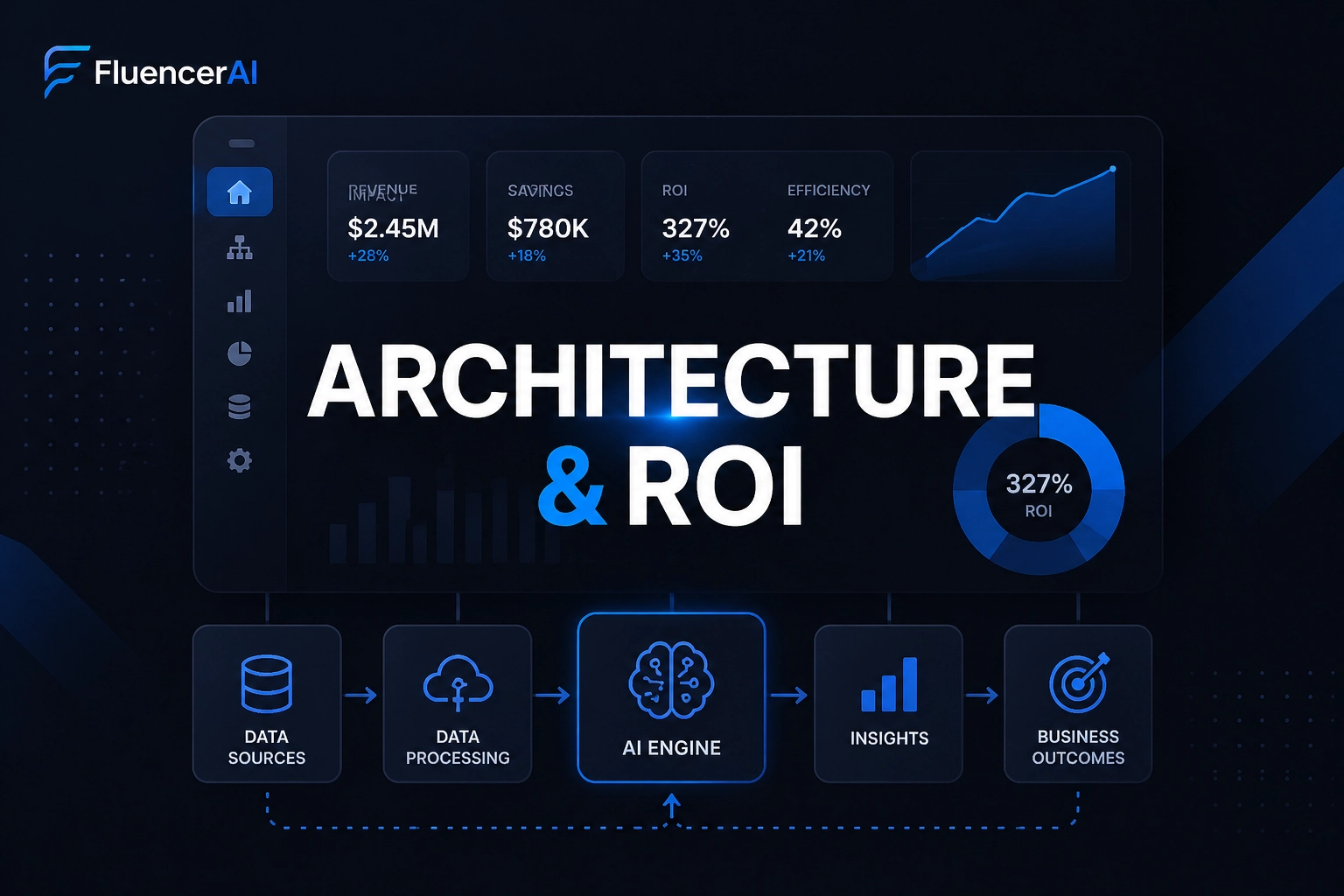
7 Architecture Mistakes Killing Your ROI (and How CTO on Demand Fixes It)

Gabriel Sorrentino
Founder · AI Solutions Architect, FluencerAI
4 min read
Have you ever felt like you're signing blank checks for your tech department? If so, you're not alone. In 2026, the data is clear: 95% of AI pilots deliver zero measurable impact on P&L, according to recent MIT research.
The problem is rarely the AI model itself. The villain is usually the architecture.
Companies are building digital sandcastles: beautiful in slide decks, but they crumble under the weight of operational reality. For CEOs and COOs, this translates into projects that take 14 months to get off the ground and die before generating the first cent of savings.
Here are the 7 deadly sins of AI architecture that are draining your Return on Investment (ROI) and how strategic technical leadership — like a CTO on Demand — can save your operation.
1. Building models before validating data (Lack of 'Data Quality Gates')
It’s the classic "garbage in, garbage out." Gartner research indicates that 60% of AI projects will be abandoned by the end of 2026 due to a lack of AI-ready data. Without "quality gates" in your architecture, you are spending thousands of dollars on tokens to process inconsistent information.
A robust architecture needs automated validation even before touching an AI Agent.
2. Treating inference and production as an afterthought
Many companies focus on the "wow" factor of the initial demo but ignore the cost of inference at scale. When your process automation prototype goes from 10 to 10,000 daily requests, the latency and the API bill can simply make the business unviable. ROI dies because the marginal cost of AI outweighs the labor savings.
3. AI Monoliths: The single-model mistake
Trying to make a single giant model solve everything is an invitation to error. In 2026, the winning trend is agent swarms or modular architectures. If you use GPT-4 to perform simple mathematical calculations and text classification at the same time, you are losing money and precision. Specialized agents, like our AI Employees, deliver better results at a fraction of the cost.
4. "Invisible" Technical Debt
AI stumbling through code without intent documentation is the modern CTO's nightmare. Technical debt in AI isn't just ugly code; it's the lack of traceability over why an agent made a decision. Without this governance architecture, your company is exposed to legal and operational risks that no ROI can compensate for.
5. "Tool Sprawl": Excessive fragmentation
Too many tools, too little integration. The hidden cost of "Glue Code" (the code needed just to make one tool talk to another) can consume up to 40% of your development team's time. A strategic view of APIs and integrations is vital to maintaining agility without creating a technological Frankenstein's monster.
6. Ignoring elastic scalability from day 1
Was your architecture designed for peak demand or just the average? If the system crashes when you scale your sales, the opportunity cost is your biggest loss. Modular and elastic architectures allow you to pay only for what you use, protecting your profit margin.
7. Estimation Error: Traditional methods for probabilistic projects
AI projects are probabilistic, not deterministic. Trying to manage the timeline of AI development as if it were a static website is the fastest path to frustration. AI ROI requires a mindset of rapid experimentation and hypothesis validation, something often lacking in non-specialized technical leadership.

How does CTO on Demand solve this chaos?
Hiring a senior-level full-time CTO can be expensive and take months. FluencerAI's CTO on Demand enters your operation with the seniority needed to audit your architecture, eliminate bottlenecks, and ensure every line of code contributes to profit.
We don't just suggest tools; we design the system. If you want to see how we transform complex architectures into real ROI, check out our Showroom.
About the Author
Related Articles

Digital Genetic Code: Why 'Having AI' isn't the same as 'Being AI' in 2026
It is April 2026, and the Brazilian corporate landscape has just received a reality check.
4 min read
10 Reasons Why Your Process Automation Isn't Delivering ROI (and How to Fix It)
You decided to invest in technology to scale your operations. You bought tools, hired licenses, and automated workflows.
5 min read
How to Measure the ROI of AI Agents (The Exact Framework We Use at FluencerAI)
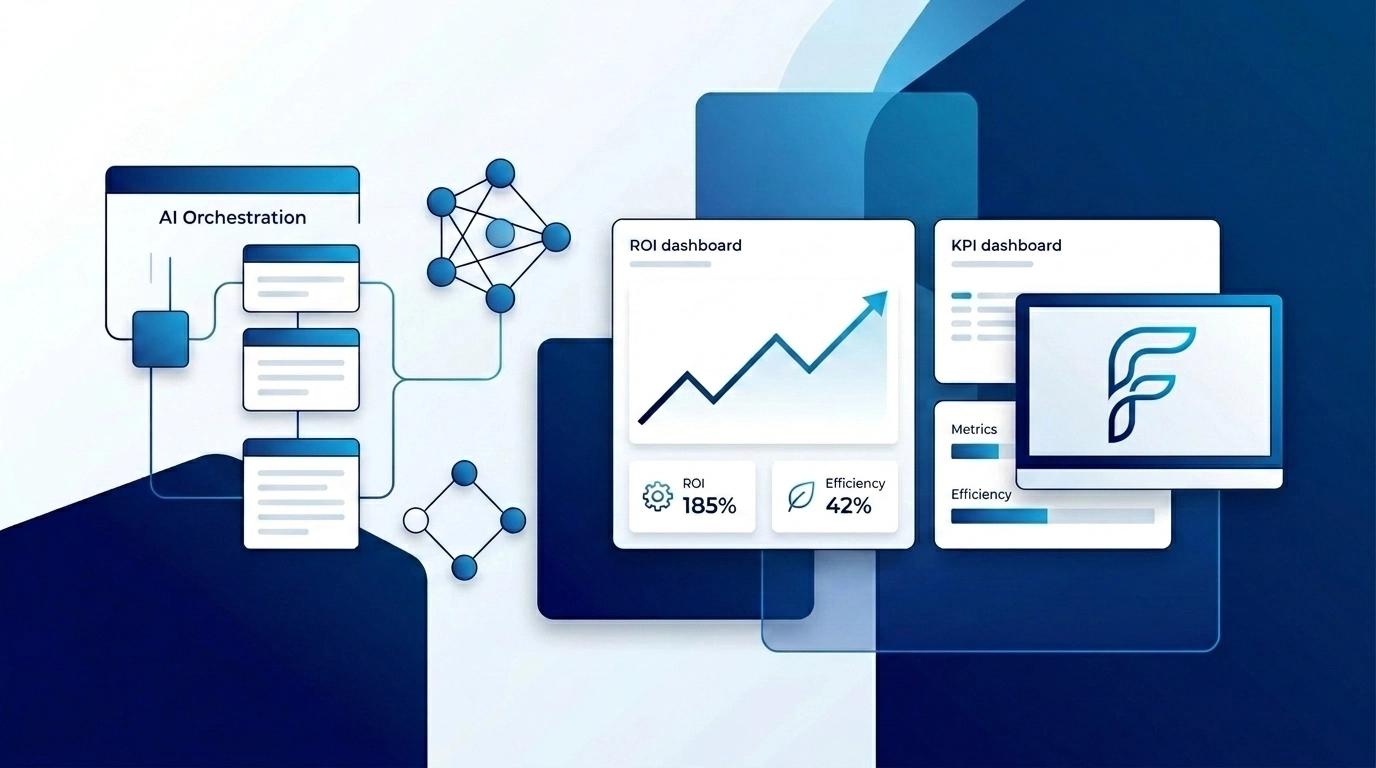
If you are a CEO or founder, you have likely been bombarded with promises that "AI will change everything." But what matters to your board isn't cool tech — it's ROI. Here's the exact framework we use at FluencerAI to measure results.
4 min read
Ready to transform your business?
Schedule a free call and discover how AI can scale your operations.