The End of Software and the Beginning of Execution: Why Your Company Needs to be AI-First

Gabriel Sorrentino
Founder · AI Solutions Architect, FluencerAI
5 min read
Sequoia Capital, one of the world's leading Venture Capital firms, recently published a thesis that should keep many CEOs and technology managers awake at night: the next most valuable product in the world is not software. It is work done by AI.
It seems like a subtle distinction, but it changes everything. Software sells you a tool to use. AI-First sells the finished result. It's the difference between buying a drill (software) and buying the hole in the wall (execution).
If your company is still focused on "which AI tools to hire," you are still playing the old game. The new game is redesigning your operation so that AI is the primary workforce, not just a productivity "ornament."
Quick Summary: What You Need to Know
- Software sells tools: You pay for access and your team does the work.
- AI sells execution: You pay for the outcome (the work done).
- AI-Enabled vs. AI-First: Using ChatGPT in your daily routine is being "AI-Enabled." Redesigning finance so AI handles reconciliation on its own is being "AI-First."
- Opportunity: For every $1 spent on software, companies spend $6 on services/labor. FluencerAI’s focus is helping you capture those $6 in efficiency.
Software Sells Tools. AI Sells Execution.
The logic is simple and brutal. For decades, the Silicon Valley business model has been selling tool subscriptions (SaaS). You buy the CRM and your salesperson fills in the data. You buy the ERP and your finance team enters the invoices.
Sequoia's thesis is that AI is changing "what" is being sold. Value has migrated from the interface to the execution. If AI can do the work of a junior analyst, why would you buy software for the analyst to use? You hire the execution of the task.
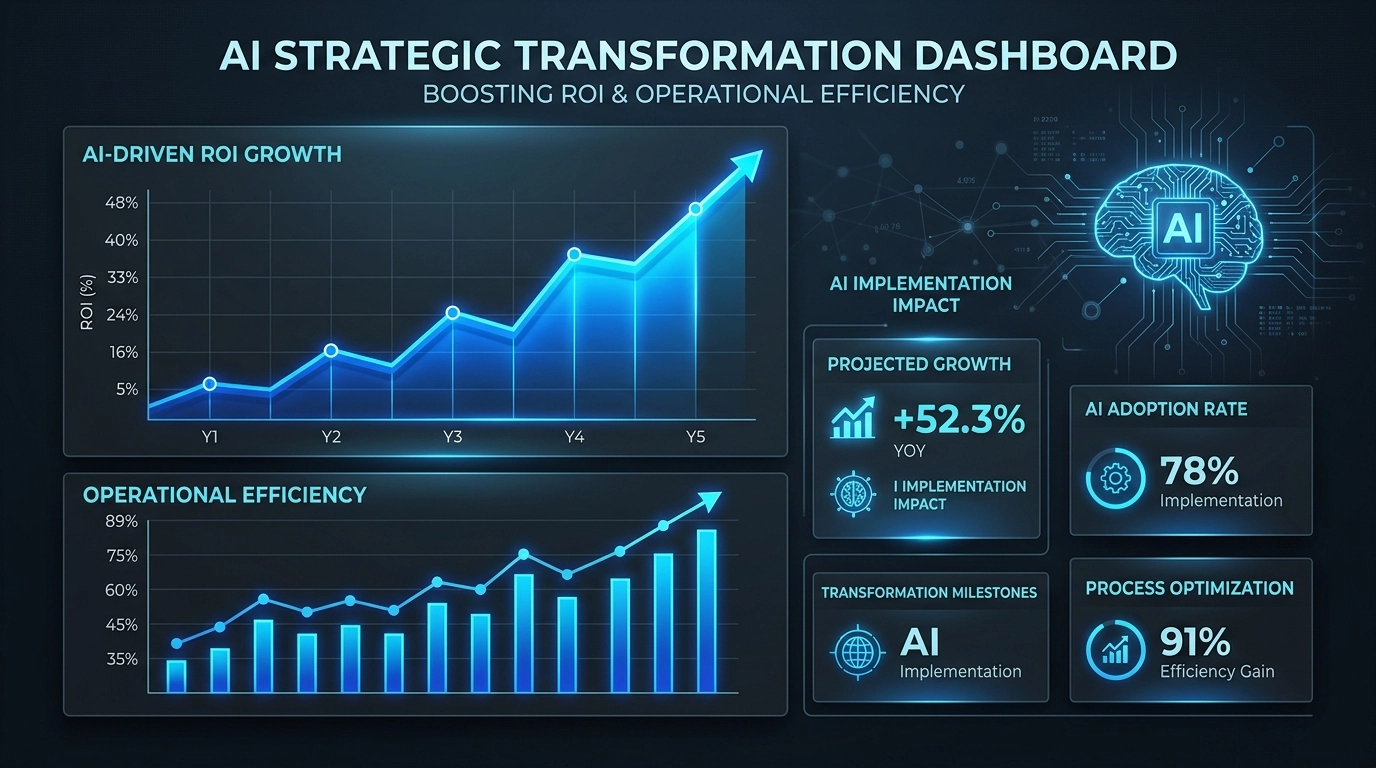
At FluencerAI, we see this every day. Companies that try to "add AI" to old processes reap marginal gains. But companies that become AI-First — rebuilding the process from scratch with AI agents — see 10x leaps in efficiency.
The Error Most Companies Are Making
Many companies think they are innovating because they pay for ChatGPT Enterprise or gave Copilots to their developers. This is being AI-Enabled. It’s like putting an electric motor on a horse carriage: it helps pull, but it’s still a carriage.
AI-First is assuming that AI does the heavy lifting, and the human enters only in exceptions and strategic decisions.
Practical Examples of AI-First Redesign:
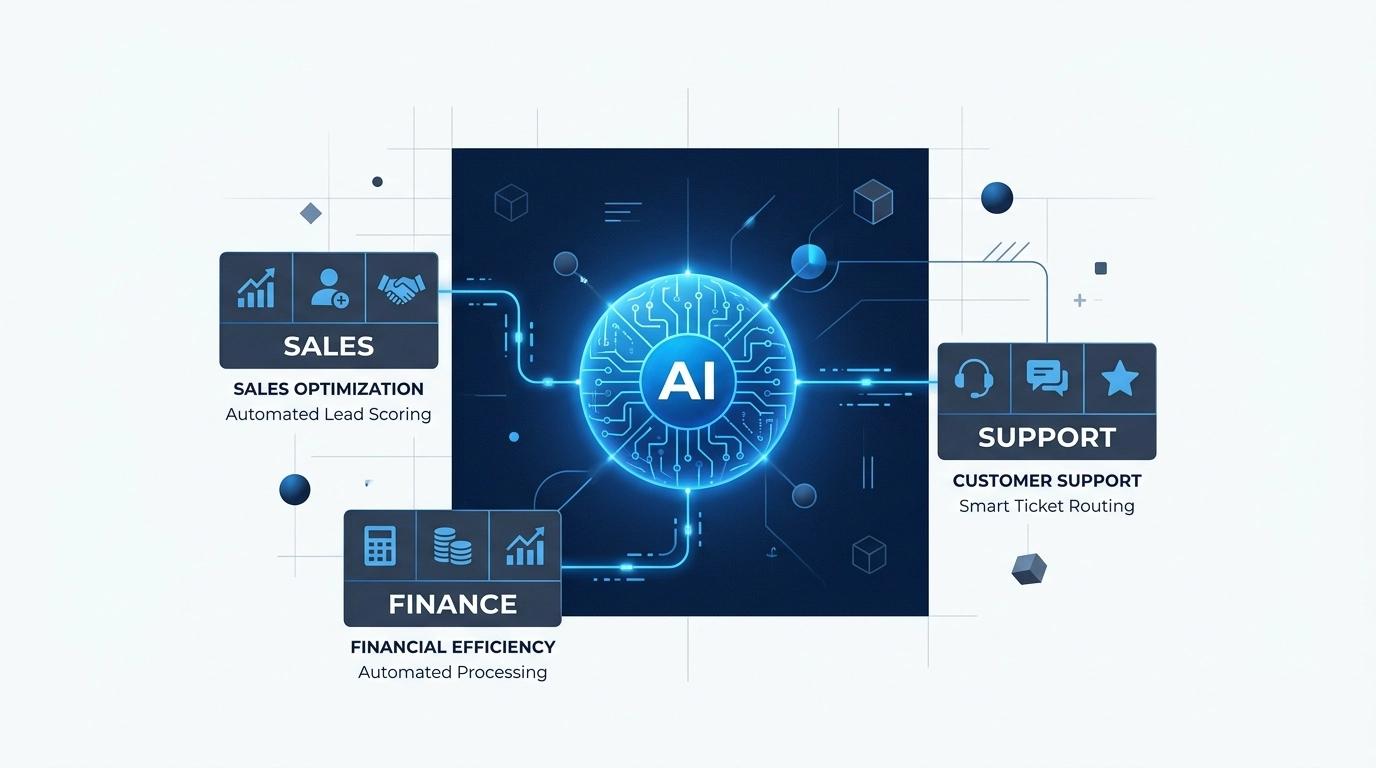
- Customer Support: Instead of a chatbot that "helps" the agent, you have an AI agent that resolves 90% of tickets from end to end, accessing the database and making changes in real-time.
- Sales Proposals: Instead of a salesperson spending 2 hours putting together a PDF, an AI-First system reads customer requirements, crosses them with inventory/pricing, and generates a personalized proposal in seconds.
- Finance: Instead of manually checking invoices, AI executes bank reconciliation, identifies discrepancies, and only alerts the CFO if there is something it cannot resolve on its own.
- Customer Onboarding: AI sets up accounts, imports customer data, and sends personalized initial instructions without human intervention.
How to Move from "Tool" to "Execution"?
The transition to an AI-First company doesn't happen by buying more licenses. It happens through a deep diagnostic of processes.
The question is not "which tool do I buy?". The correct question is: "Which parts of my business can be redesigned to work with AI from the start?"
At FluencerAI, our AI consultancy focuses on identifying these bottlenecks where human execution costs are high and predictability is low. We don't just suggest tools; we design and implement the agents and process automations that do the work for you.
1. What does it mean to be an AI-First company?
Being AI-First means that when designing any internal process or product, the first execution option is Artificial Intelligence. Humans are moved to the top of the pyramid, acting in supervision, strategy, and exception handling.
2. What is the difference between AI-Enabled and AI-First?
AI-Enabled is using AI as an assistant (e.g., using ChatGPT to write an email). AI-First is when the process is automated so that AI executes the entire task autonomously (e.g., a system that receives an order, generates the contract, sends it for signature, and bills the customer).
3. Does my company need a CTO for this?
The transition requires technical leadership. If your company doesn't have a strong technology arm, FluencerAI's CTO as a Service model can help guide this strategy without the cost of a full-time executive.
4. Where should I start?
Start with high-volume areas and clear rules: finance, support, sales triage, or onboarding. Wherever there is manual repetition, there is an opportunity for AI execution.
Conclusion: The Future Belongs to Those Who Execute
Software, as we know it, is becoming a commodity. What will differentiate the winning companies from the losers in the coming years is the ability to convert AI into work performed.
If you want to stop buying "tools" and start implementing "execution," FluencerAI is your strategic partner. We help startups and mid-sized companies identify and capture the real ROI of artificial intelligence.
Ready to redesign your operation?
Schedule a diagnosis with FluencerAI and discover how to transform your company into an AI-First machine.
About the Author
Related Articles
Global Leadership: How to Manage Remote Teams Without Losing Your Sanity (and Profit)
!heroImage If you still get that uneasy feeling when you think about your lead developer being in Berlin, your designer in Curitiba, and you trying to orchestrate everything from
5 min read
Technical Discovery: The Questions Your Fractional CTO Will Ask to Organize Your Scale
Have you ever felt like your company's technology is a "black box"?
4 min read
HumanX 2026: Why Speed Without Method is the Recipe for AI Chaos
!HumanX 2026 Hero If you’ve been following the behind-the-scenes of HumanX 2026 in San Francisco, you’ve felt a clear shift in the air.
5 min read
Ready to transform your business?
Schedule a free call and discover how AI can scale your operations.