7 Mistakes You're Making with AI Agent Implementation (and How to Fix Them)

Gabriel Sorrentino
Founder · AI Solutions Architect, FluencerAI
5 min read
You’ve likely heard that AI agents are the future of business productivity. However, market reality is brutal: approximately 95% of AI pilot projects fail—not due to a lack of technology, but because of critical implementation and strategic errors.
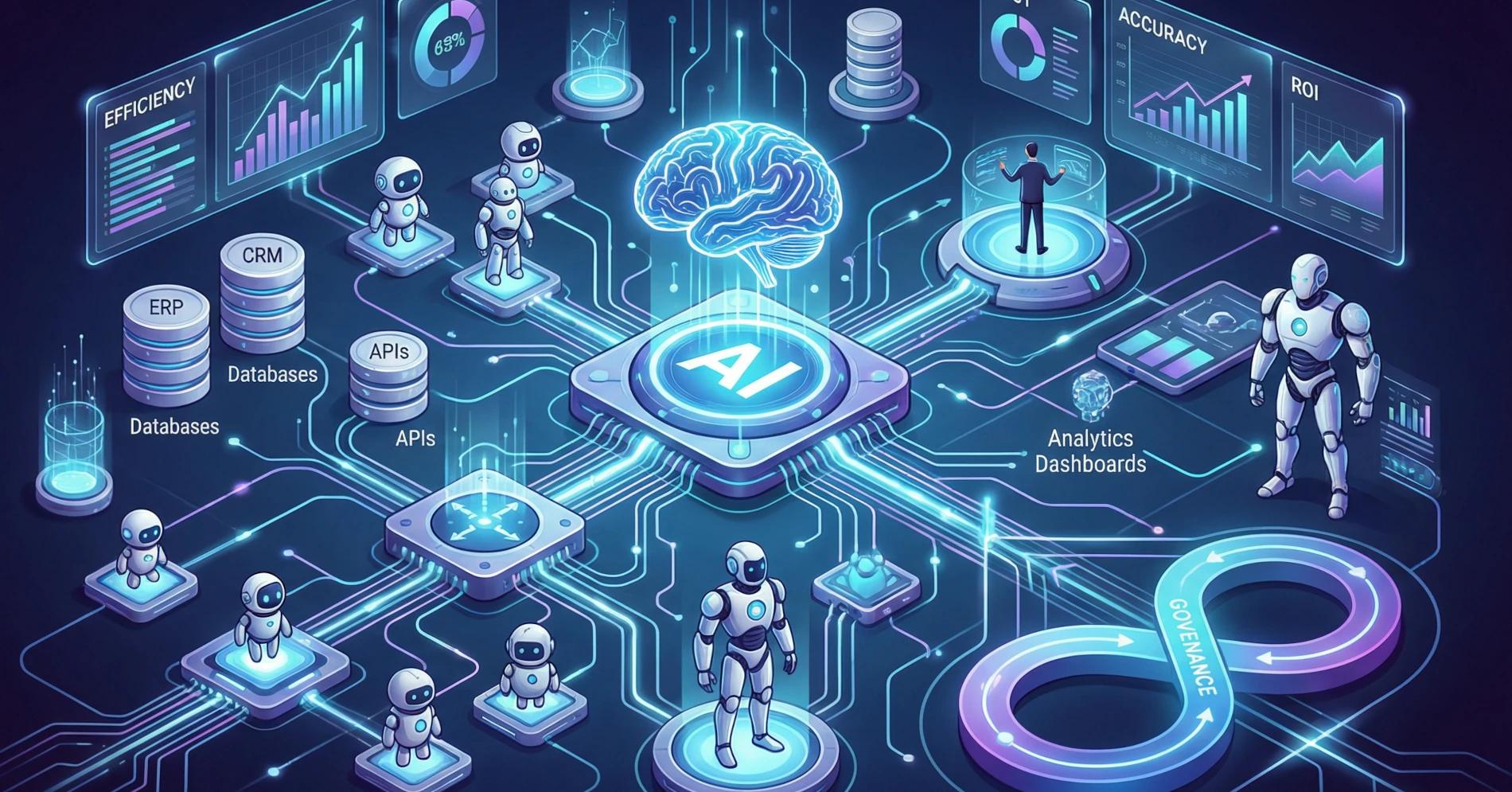
Many companies treat AI agents as "souped-up chatbots" when they should be treating them as new operational team members requiring processes, tools, and supervision. If your company is investing in AI and not seeing the expected ROI, you are likely making one of these mistakes.
In this article, we’ll dissect the most common failures that drain budgets and how FluencerAI helps companies structure implementations that truly impact the bottom line.
Executive Summary: Why Do AI Agent Projects Fail?
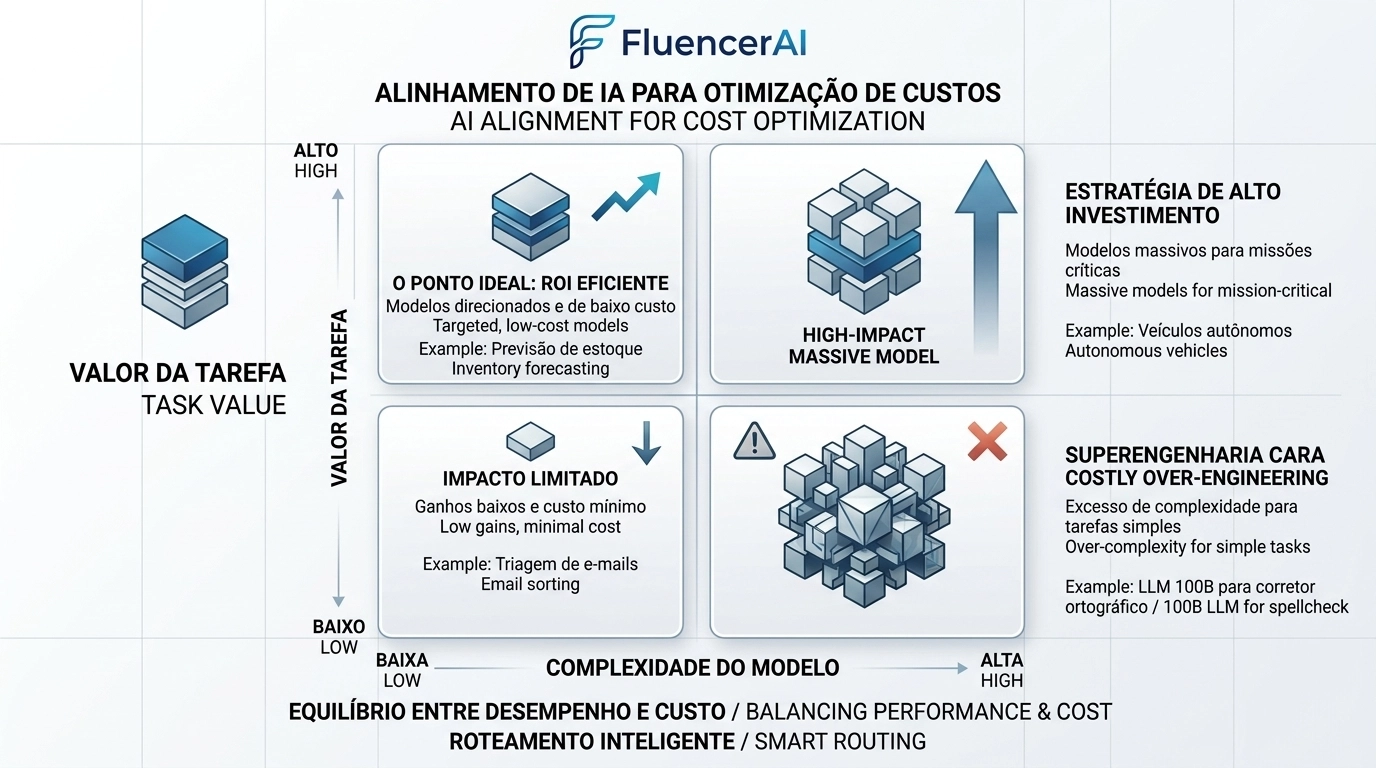
Most failures occur due to misalignment between model cost and task value, a lack of real integration with internal systems (APIs), and the absence of a governance layer. To succeed, AI needs orchestration, not just prompts.
1. Using Premium Models for Simple Tasks (ROI Waste)
The costliest mistake is using models like Claude Opus for every step of a process. Compute costs can account for up to 80% of AI expenses.
The Mistake: Calling the smartest, most expensive model to classify a simple email or format basic text.
The Fix: Implement a "Model Router" architecture. Use smaller, faster models (like GPT-4o-mini or Llama 3) for triage and reserve heavy models only for complex reasoning or critical decision-making.
2. Treating Agents as "Text Boxes" instead of Systems
If your agent only answers questions in a chat, it isn't an agent; it’s an assistant. A real agent executes actions.
The Mistake: Limiting AI to a conversational interface without tool access.
The Fix: Connect the AI via APIs and Integrations to your CRM, ERP, and databases. Real value arises when the agent can autonomously query an order, update a lead status, or generate an invoice.
3. Underestimating Data Integration Complexity
Building the agent is the easy part (20% of the effort). Connecting that agent to company data flows securely and reliably represents the other 80%.
The Mistake: Thinking that "giving the website link" to the AI is enough.
The Fix: Structure data pipelines (RAG - Retrieval-Augmented Generation) that fetch real-time information from verified sources. Without this, the agent will hallucinate plausible but incorrect information, destroying user trust.
4. The "Ghost Loop" Problem in Multi-Agent Systems
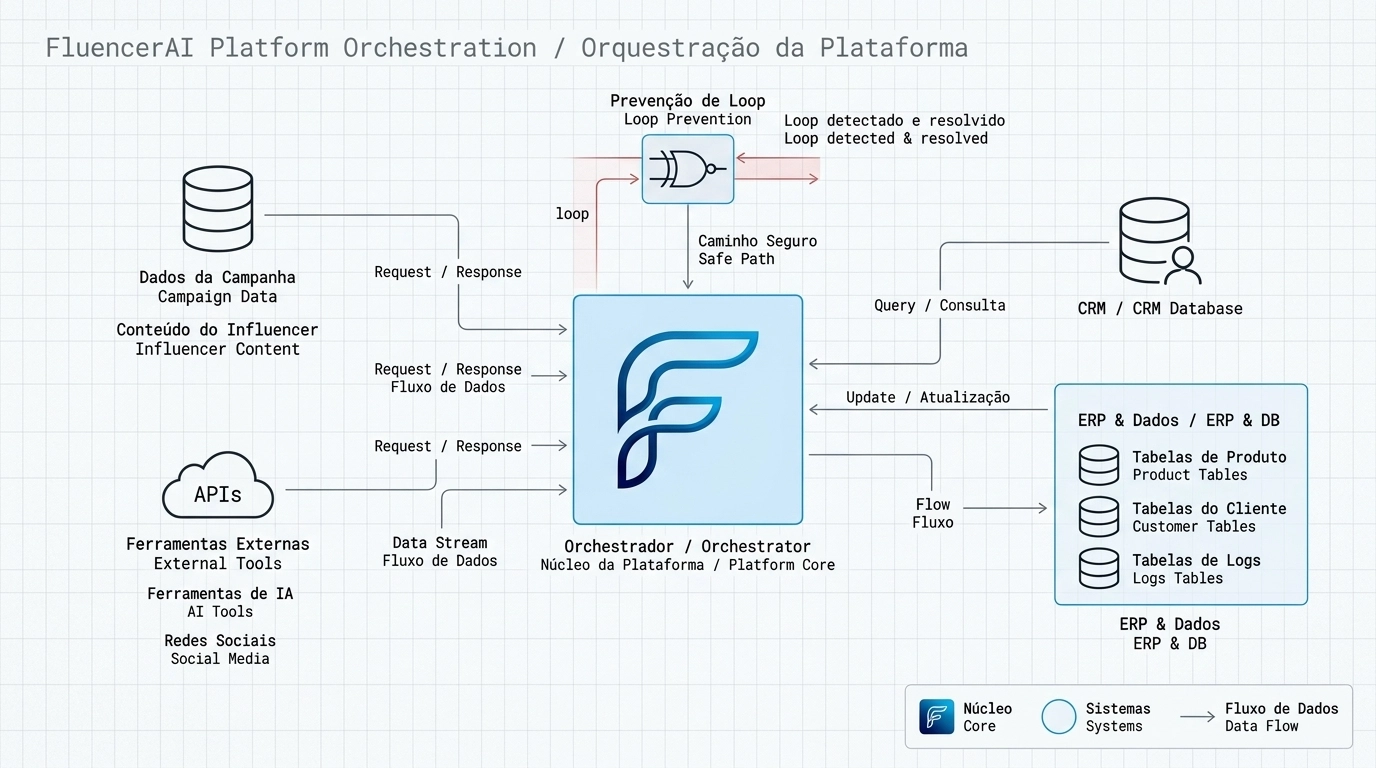
When you put two or more agents to work together without clear supervision, they can enter infinite loops, consuming thousands of tokens without delivering results.
The Mistake: Creating flows where Agent A asks something of Agent B, which returns it to A due to lack of context, generating invisible costs and zero efficiency.
The Fix: Define clear handoff protocols and an "Orchestrator" layer that monitors task progress and interrupts the process if a loop is detected.
5. Ignoring "Human-in-the-loop" (AI without Brakes)
Many companies try to automate 100% of a process at once. This is a governance error that can be costly in terms of reputation or financial loss.
The Mistake: Letting AI make high-impact decisions (like credit approval or aggressive discounts) without human review.
The Fix: Implement validation stages. The AI prepares the solution, but a human reviews and approves before final execution, especially in the first 90 days of operation.
6. Lack of Monitoring and Observability
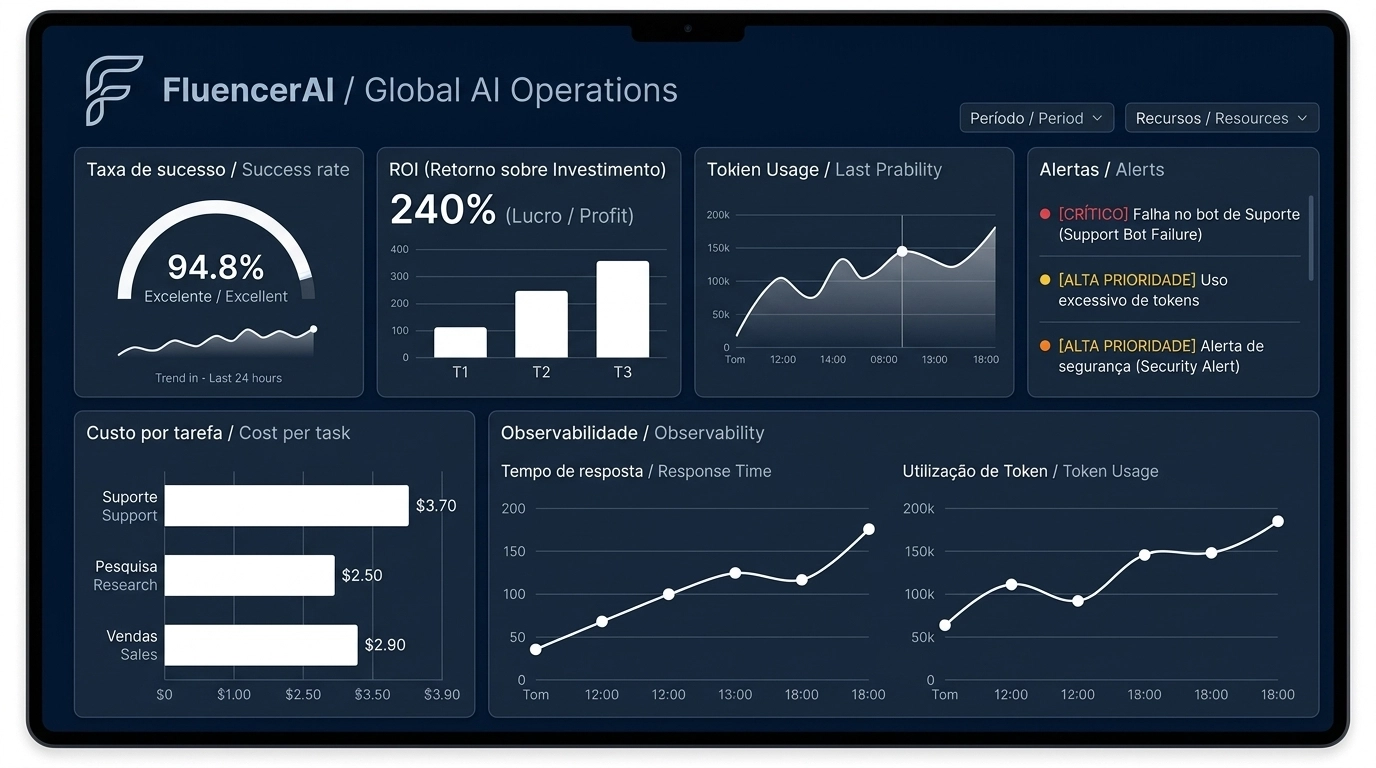
AI models suffer from "drift." What works today might perform worse tomorrow due to changes in user behavior or updates to base models.
The Mistake: "Set and forget."
The Fix: Use Dashboards and Data Visualization to monitor success rates, cost per task, and response accuracy in real-time.
7. Trying to Build Everything In-House without Senior Technical Leadership
Companies spend months trying to recruit scarce talent or asking generalist developers to build complex AI systems. The result is often "spaghetti" code that doesn't scale.
The Mistake: Lacking a strategic technical direction focused specifically on AI.
The Fix: Rely on a Fractional CTO or a specialized consultancy like FluencerAI. This accelerates time-to-market and prevents you from making expensive architectural errors.
Frequently Asked Questions (FAQ)
How much does it cost to implement an AI agent?
The cost varies drastically depending on integration complexity and data volume. The focus should always be on the cost per automated task versus the current human cost.
How do I prevent AI from making up information (hallucinations)?
Through a technique called RAG (Retrieval-Augmented Generation), where the agent is forced to consult your company documents before answering, citing the sources.
Will AI agents replace my employees?
They replace repetitive tasks, not people. The goal is to free your team for high-value activities, increasing the company's scaling capacity without increasing headcount proportionally.
Conclusion: Move from Hype to Execution
Implementing AI agents is not about "playing" with prompts; it’s about systems engineering and business strategy. If you want to stop wasting time with pilots that never launch and start seeing real automation in your operations, FluencerAI is your execution partner.
Ready to transform your operation with real AI?
Schedule a diagnosis with FluencerAI and discover where the biggest automation opportunities lie in your company.
About the Author
Related Articles
From Demo to Production: Why Infrastructure and Data Matter More Than the Model
You’ve seen this movie before: a company showcases an impressive AI agent demo. It answers complex questions, summarizes documents, and seems ready to revolutionize operations.
3 min read

Why Everyone is Talking About MCP (And How It Connects Your AI to Company Data)
Have you ever tried using AI to analyze your company's data only to realize it seems to "live in a bubble"?
5 min read

Digital Genetic Code: Why 'Having AI' isn't the same as 'Being AI' in 2026
It is April 2026, and the Brazilian corporate landscape has just received a reality check.
4 min read
Ready to transform your business?
Schedule a free call and discover how AI can scale your operations.