
Financial Process Automation with AI: How to Eliminate Bottlenecks and Scale Revenue

Gabriel Sorrentino
Founder · AI Solutions Architect, FluencerAI
4 min read
For many growing companies, the finance department ends up becoming a "tax on success." As sales volume increases, operational complexity grows exponentially, not linearly. The result? Urgent hires just to deal with bureaucracy, manual billing errors that generate friction with customers, and cash visibility that is always lagging behind reality.
If your financial operation still depends on humans moving data from one spreadsheet to another or checking invoices manually, you don't have a staffing problem — you have an architecture problem.
AI applied to finance isn't about replacing your CFO; it's about freeing your strategic team from mechanical work, ensuring that billing keeps up with the scale of the business without inflating headcount.
Executive Summary: The Impact of AI on Finance
- Time Reduction: Well-implemented financial automations reduce the time spent on expense processing and billing by up to 75%.
- Cost Efficiency: Accounts payable automation can save up to 70% of the department's operational hours.
- Average ROI: Autonomous agent projects for finance show an average ROI of 80%, outperforming most other IT initiatives.
- Strategic Decision: AI allows bank reconciliation in minutes, offering real-time cash flow visibility for quick decisions.
Where Does AI Financial Automation Really Generate Value?
Unlike traditional automation based on rigid rules ("if X, do Y"), AI can handle the variability and ambiguity of real financial documents and processes.
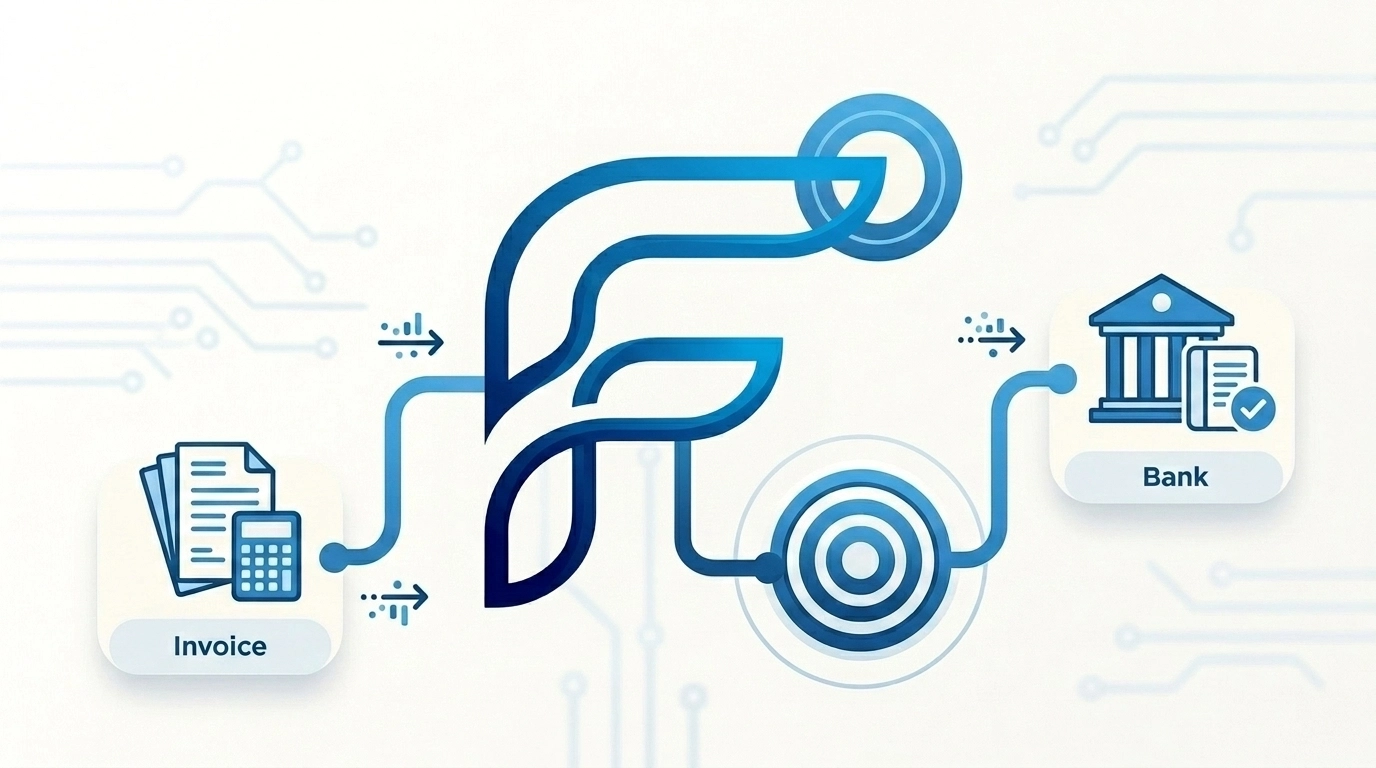
1. Intelligent Billing and Accounts Receivable
The most common bottleneck is order processing and invoice issuance. AI agents can read contracts, identify specific commercial conditions, cross-reference them with delivery data, and issue invoices without human intervention.
- Before: Manual checking of sales spreadsheets vs. ERP.
- After: Autonomous agents validate the data and trigger billing, notifying only the exceptions.
2. Accounts Payable and Expense Management
Receiving supplier invoices in various formats (PDF, image, XML) is a time sink. Modern AI models extract data with over 99% accuracy, classify the cost center, and schedule payment in your ERP or bank via API.

3. Bank Reconciliation and Auditing
Cross-referencing bank statements with internal records is usually the nightmare of the monthly close. AI identifies patterns and discrepancies instantly, resolving 90% of reconciliations autonomously and pointing out only the 10% that actually require human analysis.
Beyond Automation: AI as an Intelligence Layer
The big difference between AI process automation and legacy systems is the capacity for learning and prediction.
- Churn and Default Prediction: By analyzing historical payment patterns, AI can signal which customers are most likely to delay the next bill, allowing for proactive action by the collections team.
- Real-Time Credit Analysis: If your company sells B2B services or products, integrating an AI agent that queries credit bureaus and internal history via API accelerates sales approval without increasing risk.

The ROI of Automation: Why Invest Now?
Implementing AI in finance is not just about "being modern." It's a margin decision. When you automate billing, you reduce the collection cycle (DSO - Days Sales Outstanding). Faster cash in hand means greater reinvestment capacity.
Trade-offs and Common Mistakes
It's not all roses. The most common mistake we see is trying to automate a process that is already chaotic.
- Automating Chaos: If your manual process lacks clear logic, AI will only make mistakes faster. First, we design the process; then, we apply technology.
- Lack of Integration: An AI that doesn't talk to your ERP or bank via APIs and integrations is just another data island. True scale comes from the fluid connection between systems.
- Underestimating Human Curation: AI is not "set and forget." In finance, governance is fundamental. Humans need to be in the loop to validate critical cases and adjust models as the business evolves.

Is your financial operation ready for the next growth spurt?
If you feel like finance is holding back your company's speed, it's time to stop putting out fires with spreadsheets. At FluencerAI, we help startups and mid-sized companies design and deploy AI agents that solve real bottlenecks.
Schedule a free diagnosis with our experts and discover how we can automate your financial operation in weeks, not months.
About the Author
Related Articles

Do You Really Need a Full-Time CTO for Your MVP? Here’s the Truth
!Executives and founders often fall into the trap of hiring a full-time CTO too early for their AI projects.
4 min read
The Architecture of Coding Agents: Why the "Harness" is the Brain of the Operation
!Coding Agent Architecture Have you ever tried asking ChatGPT or Claude to build an entire system from scratch using only the chat window?
4 min read

Digital Genetic Code: Why 'Having AI' isn't the same as 'Being AI' in 2026
It is April 2026, and the Brazilian corporate landscape has just received a reality check.
4 min read
Ready to transform your business?
Schedule a free call and discover how AI can scale your operations.